


Feeding your chickens the right diet is one of the most important parts of keeping a healthy flock. What Chickens Can Eat Whether you’re raising backyard hens for fresh eggs or simply as pets, understanding what chickens can eat helps ensure proper growth, strong egg production, and overall wellbeing. Chickens are natural omnivores, which means they enjoy a wide variety of foods—but not everything is safe for them.
The Foundation: Commercial Chicken Feed
The base of your chickens’ diet should always be a high-quality commercial feed formulated for their age and purpose.
- Starter Feed – For chicks (0–8 weeks)
- Grower Feed – For adolescent chickens
- Layer Feed – For laying hens (usually 16–18 weeks and older)
Layer feed contains the right balance of protein, vitamins, and calcium to support egg production. Always provide clean, fresh water alongside feed, as chickens drink frequently throughout the day
Grains Chickens Can Eat
Grains provide energy and are often included in commercial feeds, but they can also be offered as supplemental treats.
Safe grains include:
- Corn (cracked or whole)
- Wheat
- Oats (uncooked)
- Barley
- Rice (cooked or uncooked in small amounts)
Corn is especially popular during colder months because it helps chickens maintain body warmth. However, grains should not replace balanced feed, as they lack complete nutrition
Fruits Chickens Enjoy
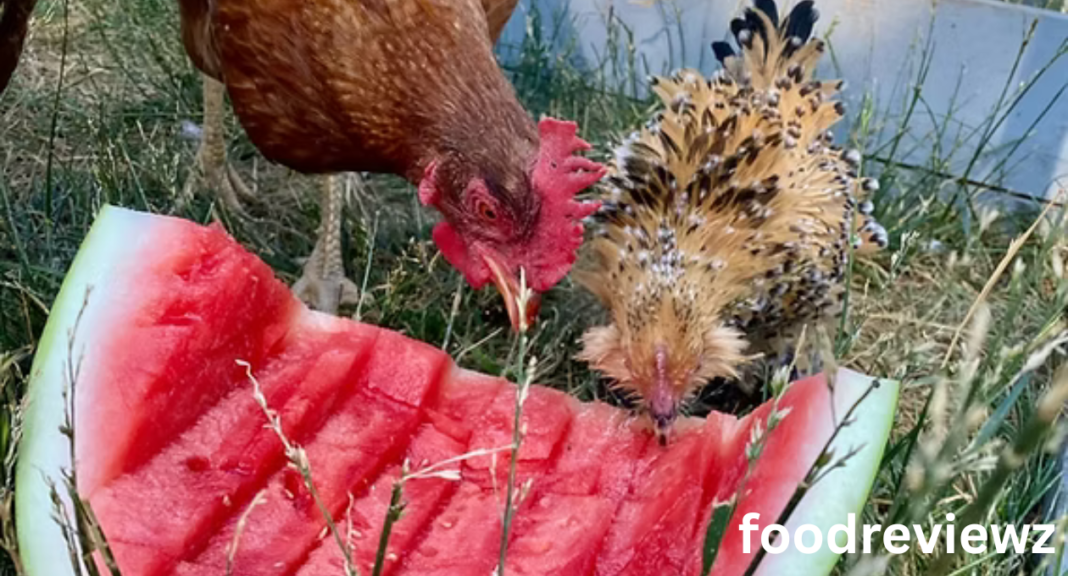
Fruits are excellent occasional treats. They provide vitamins and hydration but should be fed in moderation due to natural sugars.
Safe fruits include:
- Apples (remove seeds)
- Berries (strawberries, blueberries, raspberries)
- Watermelon
- Grapes (cut in half)
- Bananas
- Peaches (no pits)
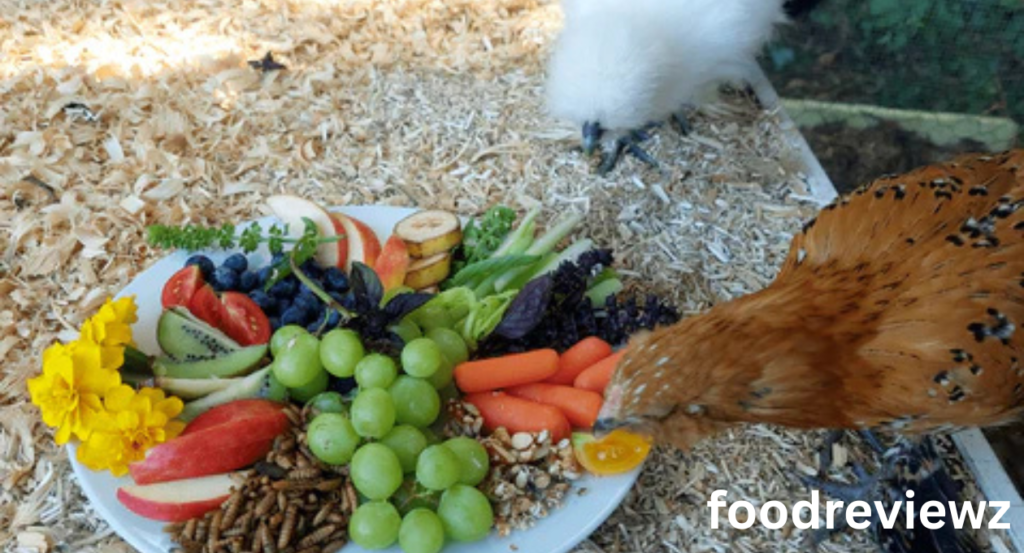
Avoid fruit pits and seeds from stone fruits, as they may contain harmful compounds
Vegetables for Chickens
Vegetables are packed with nutrients and are a fantastic addition to your chickens’ diet.
Great vegetable options:
- Leafy greens (lettuce, kale, spinach in moderation)
- Carrots
- Cucumbers
- Pumpkin
- Zucchini
- Cabbage
- Peas
Chickens also love kitchen scraps like vegetable trimmings. Hanging a cabbage in the coop can even provide entertainment and enrichment
Protein Sources
Chickens naturally forage for insects, worms, and bugs. Protein is especially important for laying hens.
Good protein options include:
- Mealworms
- Earthworms
- Cooked eggs (yes, chickens can eat eggs—just cook them first)
- Cooked beans (plain, not seasoned)
- Plain yogurt (small amounts)
Avoid raw dried beans, as they contain toxins that are harmful to chickens
Kitchen Scraps: What’s Safe?
Many kitchen leftovers are safe for chickens, helping reduce food waste.
Safe scraps include:
- Cooked rice and pasta
- Bread (very small amounts)
- Plain cooked vegetables
- Cooked meat (unseasoned)
However, scraps should only make up about 10% of their overall diet to maintain balanced nutrition
Foods Chickens Should Avoid
Some foods can be dangerous or toxic to chickens. Avoid feeding:
- Avocado (especially the pit and skin)
- Chocolate
- Caffeine
- Raw dried beans
- Moldy or spoiled food
- Salty or heavily processed foods
- Green potato peels
When in doubt, it’s best not to offer it
Calcium and Grit: Essential Additions
Laying hens need extra calcium for strong eggshells. Offer crushed oyster shells free-choice so hens can consume what they need.
Chickens also require grit—small stones that help grind food in their gizzard. If your flock free-ranges, they may find grit naturally. Otherwise, provide commercial grit separately.
Conclusion
Feeding your chickens properly is one of the most important responsibilities of flock ownership. While chickens can eat a wide variety of foods—including grains, fruits, vegetables, and protein-rich treats—the foundation of their diet should always be a balanced commercial feed appropriate for their age and laying stage. Treats and kitchen scraps are a great supplement, but they should never replace complete nutrition.
Providing fresh water, access to grit, and additional calcium for laying hens ensures strong eggshells and healthy digestion. Just as important is knowing which foods to avoid, such as avocado, chocolate, raw dried beans, and spoiled leftovers.
faqs
1. Can chickens eat bread?
Yes, chickens can eat bread in small amounts. However, it offers little nutritional value and should only be given occasionally as a treat.
2. Can chickens eat raw vegetables?
Yes, most raw vegetables are safe. Leafy greens, cucumbers, carrots, and cabbage are excellent choices. Just cut large pieces into manageable sizes.
3. Is it safe for chickens to eat meat?
Chickens are omnivores and can eat small amounts of cooked, unseasoned meat. Avoid processed or heavily salted meats
4. Can chickens eat eggs?
Yes, cooked eggs are a great protein source. Always cook them first to prevent hens from developing a habit of eating their own raw eggs
5. How often should I give treats?
Treats and scraps should make up no more than 10% of a chicken’s total diet. The majority should come from balanced commercial feed.